
KNOWING WHEN TO CALL LEADWORK SPECIALISTS FOR LEAD ROOF REPAIRS IN LANCING
Not every roofing problem needs a major repair. A loose tile, a blocked gutter or a small area of damaged flashing may be relatively straightforward to put right. However, problems involving leadwork could need a more detailed assessment. Lead is a durable material, but it needs to be installed in a way that allows it to expand and contract as temperatures change.
If an original installation in Lancing is unsuitable, covering the damaged area may not provide a lasting solution. At Traditional Leadwork, we help property owners understand when attention from our leadwork specialists may be needed for pitched roofs or flat roofs.
Good roofing companies should be able to identify any problems that need lead roofing repairs before the damage becomes more extensive.
WHEN SHOULD YOU ASK FOR PROFESSIONAL ADVICE?
One of the clearest signs of a roofing problem is water entering the building.
Damp patches on ceilings, staining around chimney breasts or water running down the internal walls may all indicate that something needs attention. However, the source of the leak will not always be directly above the area where the water becomes visible. Rainwater can travel along roof timbers or other surfaces before appearing inside your Lancing property.
This is why it is important to identify the actual cause before arranging repairs.
A roofer should be able to inspect the relevant areas and explain whether the problem involves the leadwork, the surrounding roof coverings or another part of the roofing structure.
SIGNS THAT LEAD ROOF FLASHING NEEDS ATTENTION
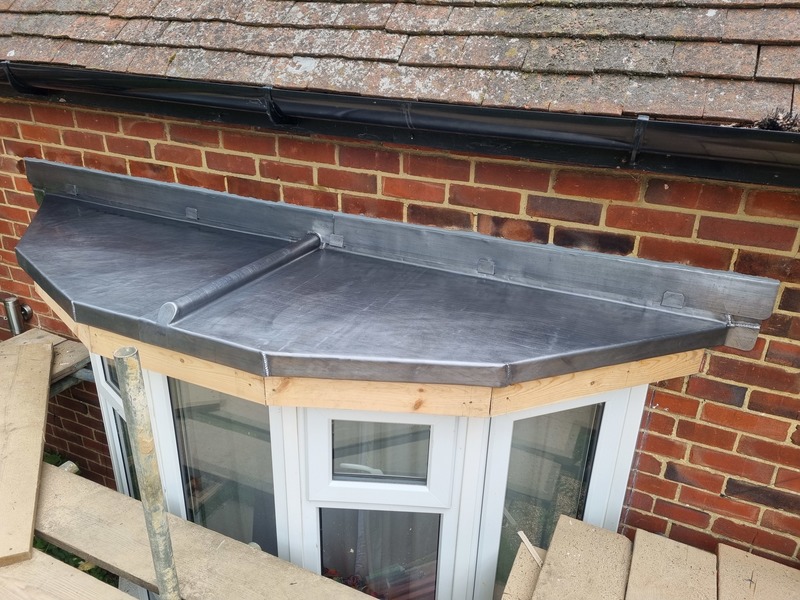
Lead roof flashing protects the junctions where roofs meet a chimney, wall, dormer or another feature. These areas become vulnerable if the flashing is damaged, loose or incorrectly fitted. Signs of a problem may include visible gaps, displaced sections of lead, cracks, or staining on nearby internal surfaces. Mortar around flashings can also deteriorate, allowing water to enter.
Not every problem with flashing requires a complete replacement.
In some cases, a localised repair may be suitable. In others, the existing detail may need to be removed and formed again to provide reliable weather protection. Where the cause is unclear or the detailing is complicated, calling in leadwork specialists can help to establish the most suitable repair approach.
WHEN LEAD ROOFS START TO SHOW DAMAGE
Lead roofs can provide many years of service when designed and installed correctly.
However, they may eventually develop splits, damaged joints or areas where the covering is no longer properly secured. A split in the leadwork can sometimes be caused by restricted thermal movement. Lead expands in warmer weather and contracts when temperatures fall.
If it cannot move as intended, stress may develop in the material.
Repairing a visible split without addressing the underlying cause may allow a problem to return. This is one reason to seek specialist advice before arranging lead roofing repairs on a damaged covering. An experienced leadwork contractor can assess whether a local repair is appropriate or whether a larger section needs attention.
PROBLEMS ON PITCHED & FLAT ROOFS
Leadwork is used in different ways on pitched roofs and flat roofs.
On pitched roofs, it commonly protects the junctions around chimneys, roof windows, dormers and valleys. Problems in these areas might be caused by damaged flashings, movement in the surrounding materials or drainage issues.
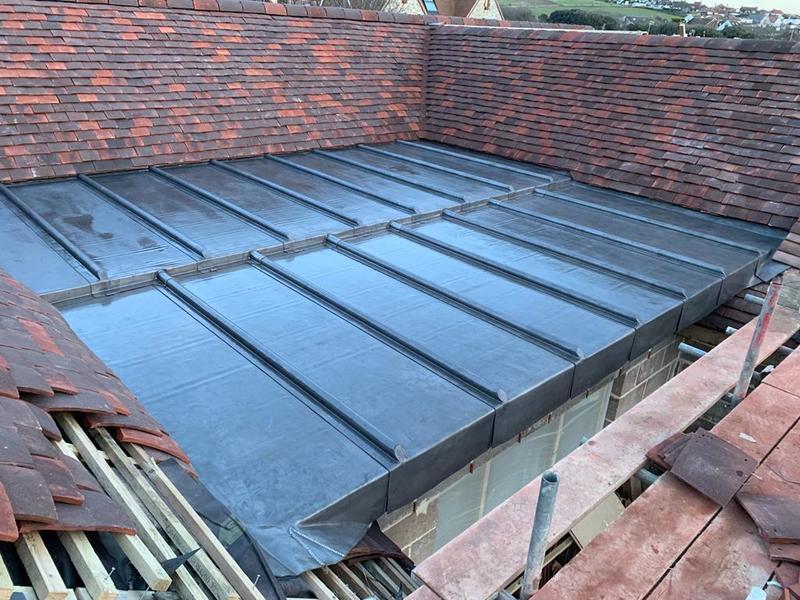
On flat roofs in Lancing, lead may form the main roof covering or be used at certain edges and junctions.
Low-pitched lead coverings will need suitable falls and drainage arrangements to prevent water from collecting unnecessarily. Blocked outlets, damaged joints and unsuitable detailing can all contribute to problems. Because the construction and the drainage requirements differ, a repair method suitable for one roof may not be appropriate for another.
WHAT IF A PREVIOUS REPAIR HAS FAILED?
A leak that returns after repair work is a good reason to investigate the roof more thoroughly. A repair undertaken in the past may have addressed the visible damage but without resolving the cause. For example, a split may have been sealed without allowing for the movement of the lead. Alternatively, a problem may have been caused by an adjacent flashing, roof covering or drainage detail.
Repeated repairs to the same area can become expensive, particularly if water continues to damage the materials underneath.
This does not automatically mean the whole lead covering needs to be replaced. It means that the condition of the existing work should be assessed before deciding what to do next.
WHEN IS THE PROBLEM URGENT?
Some roofing defects in Lancing need more prompt attention than others.
Active water entering the building, loose materials that could fall and damage following severe bouts of weather should not be left unattended. Water reaching electrical fittings is a particular concern. If this happens, avoid the affected area and seek appropriate professional assistance.
Even if there is no obvious sign of a leak, damaged lead flashing or split lead coverings should be investigated by a suitably experienced roofer before the problem becomes more serious.
Property owners should avoid climbing onto roofs or attempting temporary repairs if they don’t have suitable training and access equipment. Professional roofing companies and leadwork contractors can advise whether immediate protective measures are needed while a permanent repair is arranged.
SHOULD YOU USE A GENERAL ROOFER OR A LEADWORK SPECIALIST?
Many roofing companies have experienced tradespeople who can inspect and repair leadwork.
For straightforward defects, a competent roofer with the appropriate experience may be able to complete the work. However, complicated lead detailing, repeated failures or extensive damage may benefit from the involvement of leadwork specialists.
This is particularly important where new lead sections need to be formed, or where the original installation may not have allowed for thermal movement. When choosing a contractor, ask about their experience with similar repairs. They should be able to explain what is causing the problem, which options are available, and why they recommend a particular solution.
WHAT HAPPENS DURING A LEADWORK ASSESSMENT?
The first step is to examine the affected area and the surrounding roof.
This may involve checking the lead covering, flashings, joints, fixings, drainage and supporting materials. The contractor should look for signs of damage and consider whether the existing leadwork has been installed appropriately. Where a repair is possible, they can explain what is needed in terms of repair work.
If replacement is the more practical option, they should be able to explain why.
A proper assessment helps property owners from Lancing to make informed decisions rather than paying for work on lead roofs that may not solve the problem.
LEAD ROOFING REPAIRS IN LANCING
If you have noticed a leak, damaged lead flashing or a problem with an existing lead covering, it is worth arranging an inspection before the damage becomes more extensive. The right repair will depend on the roof design, the condition of the materials and the cause of the defect.
Traditional Leadwork discusses the problem, assesses the leadwork and explains which repair options are available for your property in Lancing. Whether you have a pitched roof, a flat roof or a combination of the two, the aim is to identify the problem and recommend work that is suitable for the roof.