
LEAD ROOF FLASHING IN HORSHAM, LEWES, WORTHING & THE SUSSEX AREA
Damaged, deteriorating or incorrectly fitted lead roof flashing can leave a property vulnerable to water ingress. If you have noticed damp patches around a chimney, discovered a leak close to a roof junction or need flashing installed as part of a new roofing project, using an experienced leadwork specialist is an important first step. This is a field that often requires a more bespoke approach, so taking time to find the right contractors is advisable.
Based in Shoreham-by-Sea, Traditional Leadwork can undertake lead roof flashing installations, repairs and replacements in Horsham, Lewes, Worthing and all Sussex areas.
With more than 50 years of combined trade experience, we work on domestic, commercial and heritage properties including pitched roofs and other suitable applications.
Our services also extend into Hampshire and Surrey.

LEAD ROOF FLASHING INSTALLATIONS & REPLACEMENTS
Lead roof flashing can help in preventing water ingress where roofing materials meet chimneys or the adjoining walls and other structural features. When fitted correctly, lead flashing directs rainwater away from vulnerable junctions and protects the areas beneath the roof covering.
Lead naturally expands and contracts as temperatures change.
If flashing is incorrectly sized, fixed or installed without allowing for movement, splits and other problems can develop over time. Leadwork specialists install new flashing and replace existing leadwork, taking the requirements of each roof into account. Whether you need flashing around a chimney, along a roof abutment or as part of an installation, we can assess the work involved and recommend the most suitable approach.
We can also undertake leadwork on churches, factories or public buildings including properties with ornate architectural features.
LEAD FLASHING REPAIRS & COMMON PROBLEMS
Lead flashing can deteriorate through exposure to the weather and movement within the roof’s structure, or if there are problems with existing fixings. Damage to lead may allow rainwater to penetrate the roof, although it should be added that the flashing itself is not always responsible for a leak.
Common signs that lead roof flashing may require attention include:
Cracks & Splits
Openings in the leadwork may allow rainwater to enter.
Loose & Displaced Flashing
Leadwork has lifted or moved away from the junction it protects.
Damp Patches & Water Stains
Moisture around chimney breasts, ceilings or walls may indicate a roofing defect.
Rippling & Distortion
Buckling can result from restricted thermal movement or unsuitable installation methods.
Deteriorating Fixings
Worn or unsuitable fixings affect the stability of the flashing.
Roof Junction Issues
Deterioration where different roofing surfaces meet can allow rainwater to enter.
Because different roofing defects can produce similar symptoms, identifying a leak’s source to stop water ingress is essential. Some flashing problems can be addressed through a localised repair. If deterioration is extensive, replacing affected leadwork may provide a more dependable long-term solution.
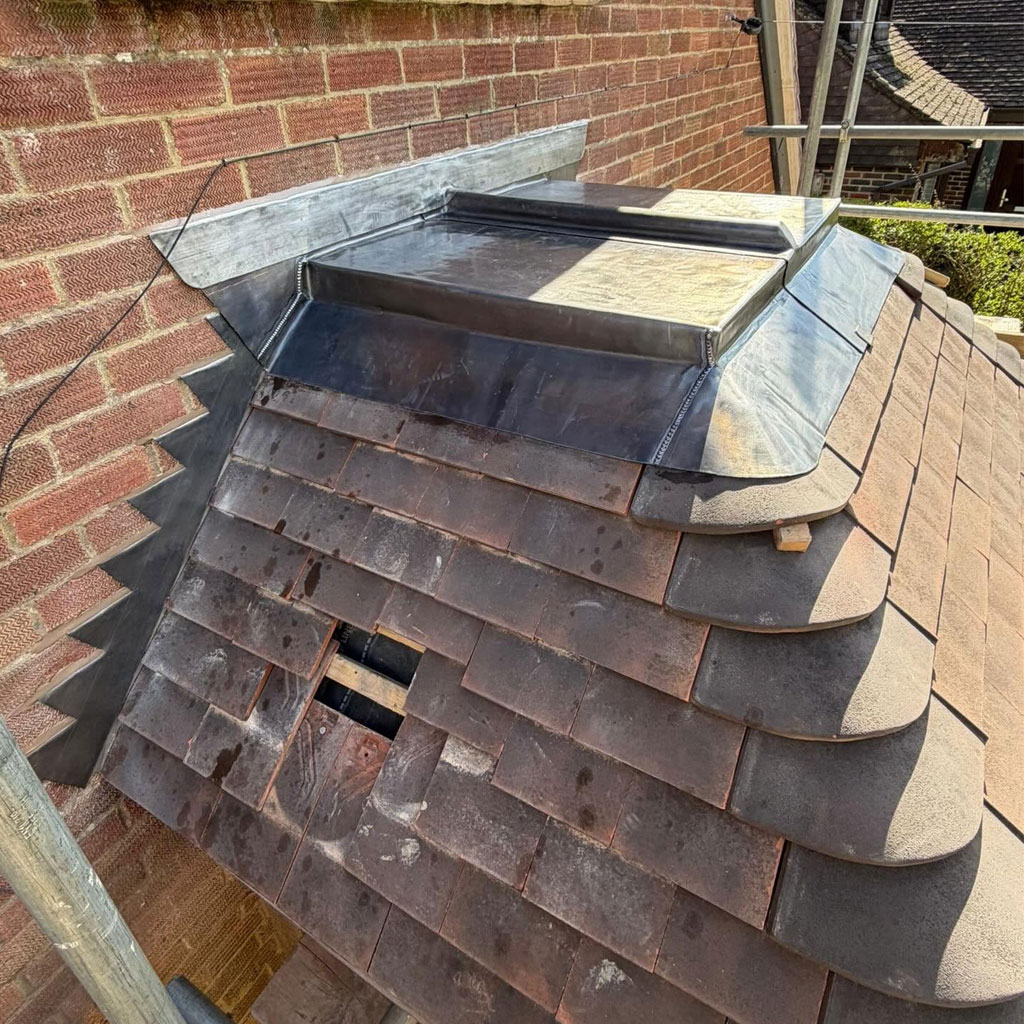
LEADWORK INSPECTIONS & ROOF JUNCTIONS
Before recommending a repair or replacement, our leadwork specialists inspect the accessible roofing areas to assess the condition of the existing installation.
Depending on the roof, we may check:
- The positioning, dimensions and condition of the lead flashing
- Signs of splitting, cracking and excessive distortion
- Wear and deterioration around the fixings and joints
- Restrictions affecting lead's natural thermal movement
- Signs of corrosion or damage to adjoining roofing materials
- The condition of the roof junctions and associated components
Lead flashing can appear sound from a distance but still conceal defects around the joints or the fixings. An inspection helps us to establish whether a localised repair is appropriate or if there are individual sections in need of replacement.
Our priority is to only recommend necessary work that reflects the roof’s condition.
WHY SPECIALIST EXPERIENCE MATTERS
Working with lead requires an understanding of its characteristics and the methods needed to accommodate natural movement. A roofer experienced in conventional pitched roofing might not have the same practical knowledge of traditional leadwork as a specialist. When comparing roofing companies in Horsham, Lewes, Worthing or elsewhere in Sussex, it is worth checking whether a contractor has experience with the particular type of lead flashing work you require.
Traditional Leadwork is owned by Martin Creighton and Paul Collins.
Both completed their roofing apprenticeships and have since worked on prestigious buildings such as Windsor Castle, Hampton Court Palace and the Cabinet Office.
Services from our company also include work on lead guttering, valleys and roof coverings, and bespoke leadwork. We combine traditional craftsmanship with a practical understanding of the property's requirements, from straightforward repair work to complex installation projects.
LEAD FLASHING FOR DIFFERENT ROOFING APPLICATIONS
Lead flashing is most commonly used on pitched roofs around chimneys, adjoining walls and junctions where rainwater might otherwise penetrate beneath the roof covering. It can also form part of more complex roofing arrangements including valleys, gutters and other architectural features that might require specialist detailing.
We undertake leadwork on suitable flat roofing structures too.
The correct dimensions, fixing methods and allowances for movement will often depend on the installation. Whether you require a small section of flashing replaced or leadwork incorporated into a larger project, we can discuss your needs with you when you get in touch with us.
DISCUSS YOUR LEAD ROOF FLASHING REQUIREMENTS
If you have noticed damaged flashing, suspect a roof junction is allowing water into a property or are planning a new installation, Traditional Leadwork can discuss your options. We provide a lead roof flashing service throughout Horsham, Lewes, Worthing and surrounding areas across Sussex, Hampshire and Surrey.
We can explain the work involved and provide a clear, transparent estimate without charge.