WHAT IS LEAD ROOF FLASHING, WHY IS IT INSTALLED ONTO ROOFS IN STEYNING AND WHAT DOES IT DO?
If you look up at the roof of your house, you will probably see slates or tiles covering most of it. You might also notice strips of grey metal around the chimney or where the roof meets a wall.
In many cases, that metal is lead roof flashing.
It might not look particularly important, but it has a useful job to do. Lead flashing helps to stop rainwater from getting through the gaps where different parts of your roof meet.
At Traditional Leadwork, we help property owners in Steyning to understand and look after the leadwork on their roofs. We are leadwork specialists so, in a few ways, we are different from general roofing companies and specifically focus on lead roofing repairs and replacements.
This is a service offered on pitched roofs, flat roofs and a combination of both.
WHAT EXACTLY IS LEAD ROOF FLASHING?
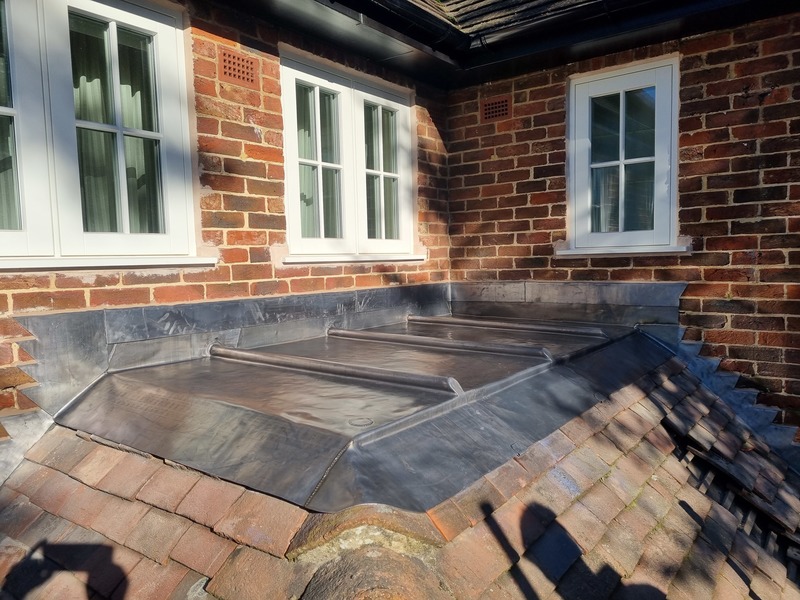
Lead roof flashing is a piece of lead that is shaped and fitted to protect a joint or junction on a roof. For example, where a chimney comes through a tiled roof, there will be a gap between the chimney and the tiles. That gap needs to be protected so rainwater cannot easily get inside.
Lead roof flashing helps provide that protection.
Lead is useful for this kind of work because it can be shaped to fit around different features. It is also durable and can provide many years of service when installed correctly. However, the lead needs to be fitted properly. Simply putting a piece of metal over a gap is not enough to make a roof weatherproof.
WHERE IS LEAD FLASHING USED?
One of the most common places to find lead flashing is around the chimney. It helps to protect the area where the chimney meets the roof. Flashing is also used where a roof meets an outside wall, such as on houses with single-storey extensions. You may find it around dormer windows, roof windows and other features that interrupt the roof covering too.
On pitched roofs in Steyning, lead roof flashing often works alongside the slates or tiles to help rainwater run down the roof without getting underneath them. Flat roofs can need flashing too, particularly where the roof covering meets a wall or another raised part of the building.
The exact arrangement depends on how the roof has been built.
WHY IS LEAD USED INSTEAD OF ANOTHER MATERIAL?
Lead has been used on buildings for a long time, and there are good reasons why it is still such a popular choice for roofing details. It can be cut and shaped to fit awkward areas, including corners and junctions that are not perfectly straight. It is also suitable for outdoor use and can last for many years.
An important thing to understand is that lead moves slightly as temperatures change.
It expands when it gets warmer and contracts when it cools. Anyone installing, repairing or replacing leadwork must allow for this movement. If lead is fixed too tightly or fitted in sections that are too large, it may eventually split. This is just one reason why experience matters when carrying out leadwork.
DOES EVERY ROOF NEED LEAD FLASHING?
Not necessarily.
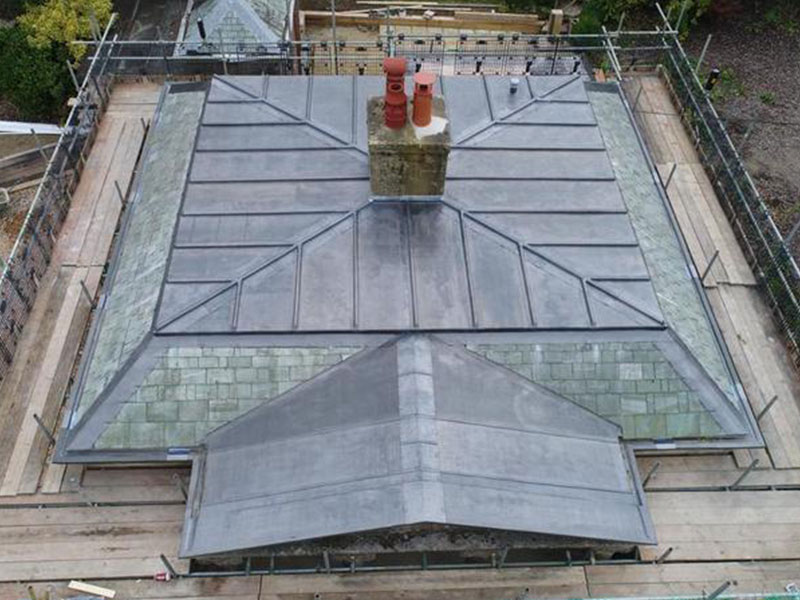
Different roofs use different materials and methods to keep water out. Some may use lead roof flashing, while others use alternative materials or waterproofing systems. Even where lead is fitted, the amount needed will depend on the design of the building. A simple roof with very few junctions may need less flashing than a roof with several chimneys, dormers and extensions.
Lead roofs may also have other lead details, like coverings, joints and drainage components. A roofer should be able to explain which areas need protection and why a particular material is suitable.
WHAT HAPPENS WHEN LEAD FLASHING IS DAMAGED?
Damaged flashing can allow rainwater to get into places where it should not be. Over time, this may cause damp patches, stained ceilings or damage to timber and other materials inside the building. Sometimes the problem is easy to see. A piece of flashing may have come loose, or there may be a visible split in the lead.
In other cases, the cause is harder to find.
Water can travel along the roofing structure before it becomes visible indoors, so a damp patch does not always show exactly where the leak started. It is worth getting the problem checked by a specialist rather than guessing which part of the roof is responsible.
CAN DAMAGED LEAD FLASHING BE REPAIRED?
Yes, in some cases.
A small area of damaged or displaced flashing on a property in Steyning might be suitable for a local repair. However, the right approach depends on the condition of the lead and what caused the problem. If the lead flashing has split because it was not fitted correctly, simply covering the split may not provide a lasting solution.
Sometimes a new piece of lead needs to be formed and installed.
A contractor experienced in lead roofing repairs can assess the damage and explain whether a repair or replacement is the better option.
The important thing is to deal with the cause of the problem, not just the visible damage.
WHO SHOULD YOU ASK TO CHECK YOUR LEADWORK?
Many roofing companies carry out work involving lead flashing. Some might have experienced leadwork specialists on their teams. For a straightforward problem, a competent roofer with suitable leadwork experience may be able to help. More complicated details can benefit from the involvement of a specialist, particularly where new pieces need to be shaped to fit unusual areas.
When choosing someone to work on your roof, ask whether they have experience with similar jobs. They should be able to explain what needs doing in terms you understand.
You should also avoid climbing onto the roof to inspect flashing yourself. A professional will be able to arrange suitable access and check the affected area safely.
LEAD ROOF FLASHING IN STEYNING
Lead flashing might be a small part of a roof, but it plays an important role in keeping rainwater outside the building. Whether your own property in Steyning has a pitched roof, a flat roof or a combination of the two, properly installed flashing can help protect vulnerable junctions.
If you have noticed loose leadwork, signs of a leak or an area of flashing that looks damaged, it is worth arranging an inspection. At Traditional Leadwork, we discuss your concerns and go on to explain which leadwork services may be the most suitable.