
LEAD FLAT ROOFS IN HORSHAM, LEWES, WORTHING & THE SURROUNDING SUSSEX AREA

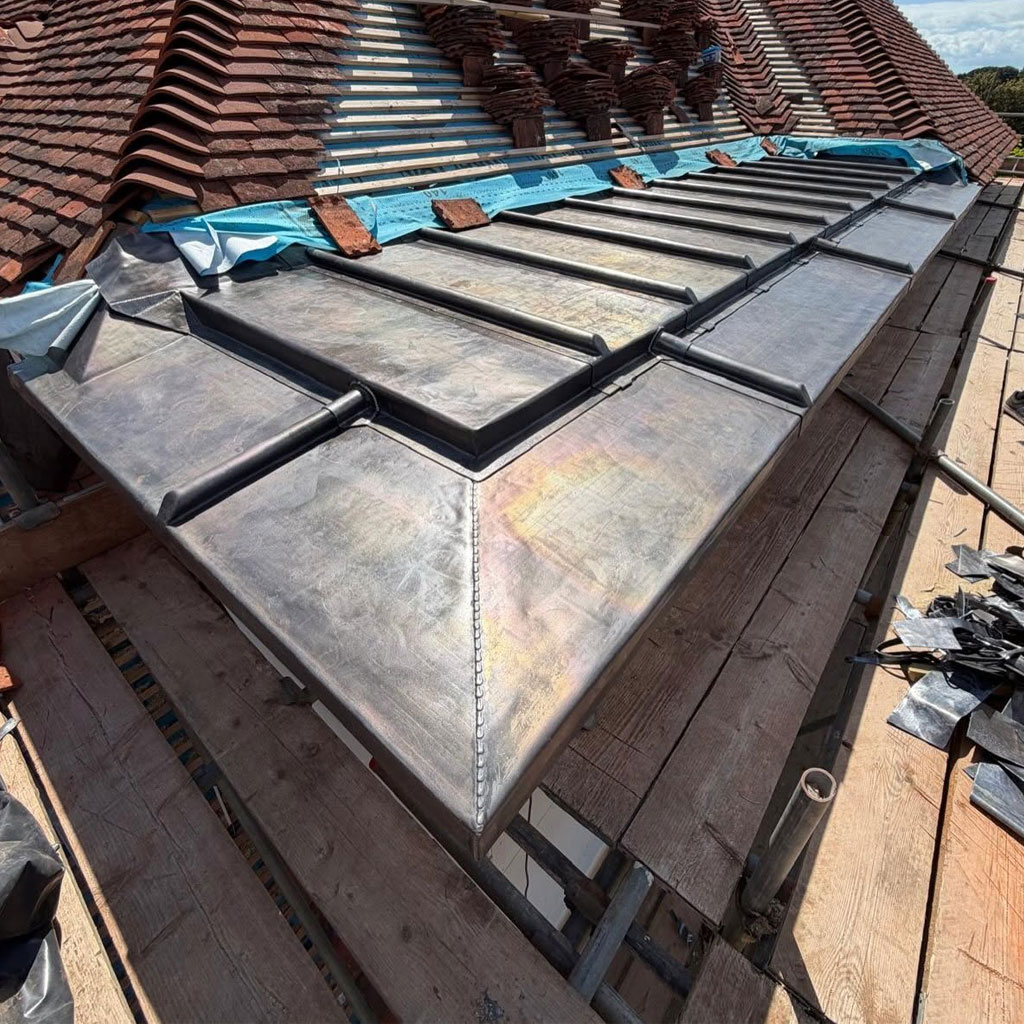
Lead is a suitable covering for flat and low-pitched roofs because it offers weather resistance, a distinctive appearance and the flexibility needed for more complex roofing details. However, the performance of a lead flat roof depends on much more than the material itself. Allowances for thermal movement must therefore be incorporated into design and installation specifications.
Traditional Leadwork can install lead flat roofs for owners of domestic, commercial or heritage properties throughout Horsham, Lewes, Worthing and the wider Sussex area. We are leadwork specialists with more than 50 years of combined industry experience and we can advise you on the most appropriate form of construction and detailing depending on the project.
We are based in Shoreham-by-Sea and also cover the Hampshire and Surrey areas.
LEAD FLAT ROOF INSTALLATIONS
Whether you are planning to have a new flat roof installed, an existing covering replaced or the leadwork incorporated into a larger roofing project, it is important to consider how the roof will perform as a system. Lead expands and contracts with changes in temperature. If sheets are incorrectly sized, fixed or jointed, movement can become restricted.
This can contribute to premature deterioration.
Suitable falls and effective rainwater drainage are equally important, particularly on roofs where water may otherwise collect. Our leadwork specialists consider the roof's dimensions, structure and intended use before recommending an installation method. The lead thickness, sheet size and jointing technique are taken into account based on the individual requirements of the roof.
All installations come with a guarantee on workmanship and a warranty on materials.
WARM & COLD LEAD FLAT ROOFS
Lead flat roofs can be constructed in warm or cold roof arrangements.
The distinction between the two concerns the position of the insulation and how moisture and condensation are managed within the roof’s structure.
Warm Roofs
A warm roof typically incorporates a vapour control layer, insulation above the structural deck and a suitable supporting arrangement beneath the lead covering. With correct design work and detailing, this approach can reduce the risk of condensation issues.
This is achieved without the ventilation void associated with a more traditional cold roof.
Cold Roofs
Cold roofs generally position insulation below a ventilated space beneath the roof covering. The ventilation arrangement allows air to circulate and also helps to manage moisture within the construction. Ventilation openings and pathways must be properly designed and unobstructed.
The suitability of a cold roof system depends on the existing structure and the requirements of the installation. We can discuss the practical differences between these construction methods and assess which approach will be more suitable for your property.
SPECIALIST LEADWORK & RAINWATER DETAILING
The junctions, edges and drainage arrangements of a lead flat roof are just as important as the main covering. Traditional Leadwork can undertake specialist detailing for stepped lead roofs and complex installations, including the integration of guttering, drips, outlets, overflows and sumps. These features direct rainwater away from the more vulnerable areas of the building.
Correctly formed joints and allowances for natural movement are particularly important where the separate lead sections meet. Poor detailing can create weaknesses that may not become apparent until a roof experiences repeated temperature changes and periods of heavy rainfall.
Our experience also extends to traditional leadwork on buildings with demanding architectural features, where the appearance and practical performance of the finished roof both matter.
WHY CHOOSE EXPERIENCED LEADWORK SPECIALISTS?
Some roofers won’t have the specialist knowledge required for lead flat roof installations.
Traditional Leadwork is owned by Martin Creighton and Paul Collins, both of whom completed roofing apprenticeships. Their combined experience includes work on prestigious properties such as Windsor Castle, Hampton Court Palace and the Cabinet Office.
We apply our practical background to projects of different sizes, from straightforward domestic installations through to more detailed roofing work on commercial and heritage buildings.
We also undertake related services including lead flashing repairs and can discuss liquid rubber systems as an alternative covering for suitable flat roofing applications.
DISCUSS YOUR LEAD FLAT ROOF REQUIREMENTS
If you are considering a new lead flat roof, or if you need an existing installation assessed for replacement, Traditional Leadwork can help you understand the available options.
We work in Horsham, Lewes, Worthing and all surrounding locations in Sussex, Hampshire and Surrey. Our team can discuss the construction, drainage and leadwork detailing involved in your project, providing a clear, transparent estimate without charge to the customer.
Please contact us to arrange a discussion about your requirements.