
LEADWORK FOR PITCHED ROOFS IN SUSSEX INCLUDING THE HORSHAM, LEWES & WORTHING AREAS
Pitched roofs rely on more than slates or tiles to keep buildings protected from the weather.
Wherever the roofing materials meet with chimneys, walls, valleys or another structural feature, carefully installed leadwork can help direct rainwater away from vulnerable areas. Poorly fitted, damaged or deteriorating leadwork could allow moisture to penetrate the roof’s structure and this might cause a problem that extends beyond the original defect.
Traditional Leadwork is a pitched roofing specialist with services available in Horsham, Lewes, Worthing and Sussex. Based in Shoreham-by-Sea, we also undertake roofing work throughout the surrounding Hampshire and Surrey areas.
With more than 50 years of combined trade experience, we install, repair and replace leadwork on domestic, commercial and heritage properties.
LOCAL LEADWORK SPECIALISTS FOR WORK ON PITCHED ROOFS
Lead is widely used on pitched roofs because it forms well to accommodate different shapes, junctions and architectural details. When leadwork is professionally specified and installed, it provides a durable, weather-resistant covering that works alongside slates, tiles and other roofing materials. Our leadwork specialists work on the areas of a pitched roof where the detailing is important.
These areas include valleys, chimneys, abutments, dormers or other locations where changes in the roof level or the direction of run-off create potential routes for water ingress.
Each roof has its own construction, pitch and drainage requirements.
Leadwork must be designed and fitted to suit the conditions, allowing for natural expansion or contraction of the material. We can assess roofs and existing components thoroughly before going on to recommend the most appropriate type of installation, repair or replacement.
LEAD VALLEYS ON PITCHED ROOFS
A roof’s valley is a channel formed where two sloped roof sections meet.
Because the valleys collect rainwater from adjoining roof surfaces, they play an important role in how water is directed towards the drainage system. Lead is commonly used to line valleys because it provides a weather-resistant surface beneath the edges of the surrounding roof coverings.
The correct detailing of the valleys is essential on projects across Horsham, Lewes, Shoreham-by-Sea, Worthing and the surrounding Sussex area.
Lead must be formed to accommodate thermal movement and installed with suitable drainage arrangements while being adequately supported. Problems might arise if the valley’s leadwork becomes damaged, displaced or restricted in movement. Debris accumulation and defects in the adjoining roofing materials can also interfere with drainage performance.
The team at Traditional Leadwork assesses existing lead valleys, undertakes appropriate repair work and replaces deteriorated sections whenever this is deemed necessary.
LEAD FLASHING AROUND CHIMNEYS, WALLS & ABUTMENTS
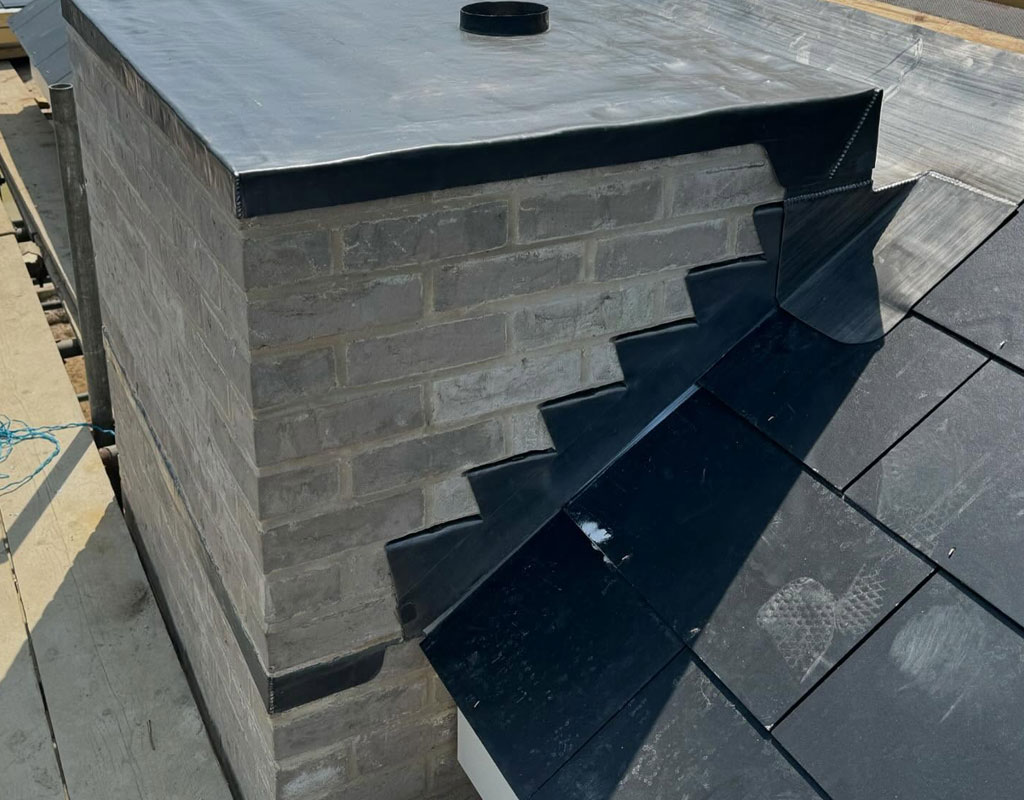
One of the most important reasons for the application of lead on a pitched roof is to protect the junctions between roofing materials and adjoining structures. Chimneys, parapet walls, roof abutments and similar features interrupt the main roof covering. Without suitable weatherproof detailing using leadwork, rainwater could find its way through these junctions into the property.
Lead flashing helps to prevent water ingress by covering and protecting the relevant joints.
Depending on the roof's original construction, different arrangements of flashings, soakers and associated components may be required. We will advise you on what is needed. The suitability of the detailing depends on factors such as roof pitch, the roof covering type and the adjoining structure.
Our leadwork specialists install, repair or replace leadwork around these vulnerable areas, with attention paid to weather resistance and the movement of the materials involved.
LEADWORK FOR DORMERS & COMPLEX ROOF FEATURES
Dormer windows, changes in the roof level and other architectural features can often create an additional junction, or several, that will need to be weatherproofed by a specialist. Lead may be used around dormer cheeks, roof junctions and other exposed details depending on the design and the construction of the property.
These areas often involve several materials meeting at different angles. Suitable detailing helps direct rainwater onto the roof covering, or into the drainage system, rather than towards the underlying structure.
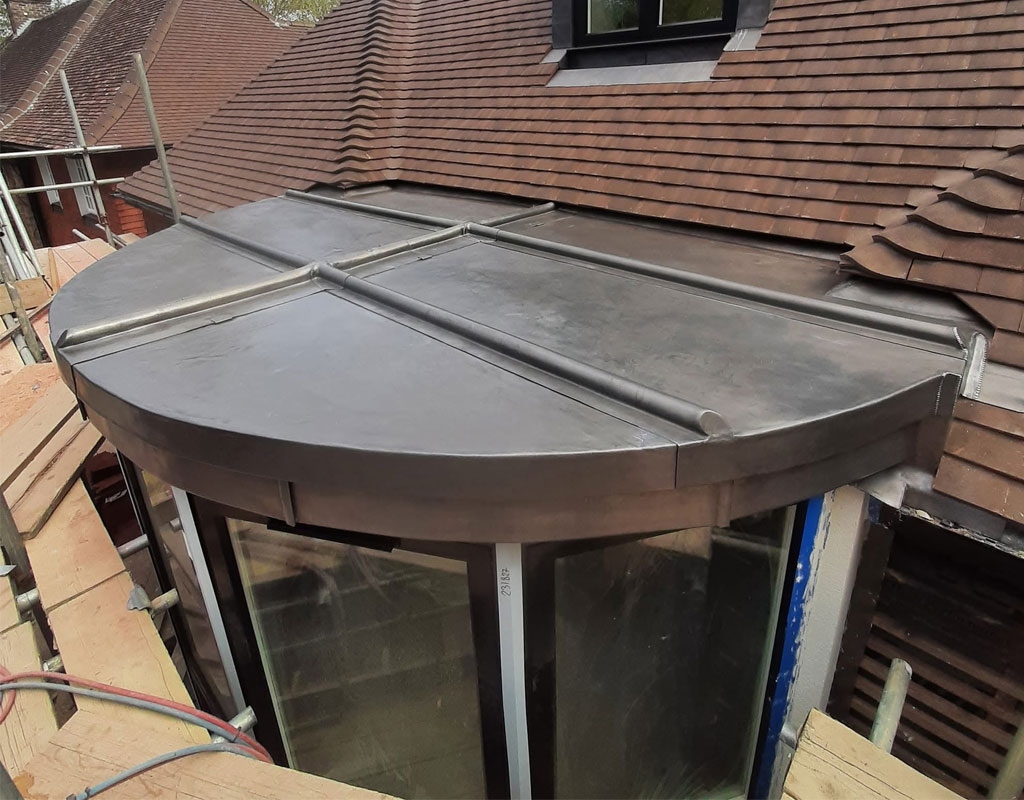
Traditional Leadwork has experience working on a variety of roof structures, including those on traditional and heritage buildings where existing architectural features might require careful consideration. We can also discuss the suitability of lead coverings for other roof areas. Our website page on lead roofs explains more about lead roofing installations and their various applications.
THE REPAIR & REPLACEMENT OF PITCHED ROOF LEADWORK
Leadwork can deteriorate over time through weather exposure, movement, damage or an issue associated with the original installation. Signs that the leadwork on a pitched roof might need our attention include splits, displaced flashing, deteriorating joints and water staining inside the property (especially on ceilings or walls).
However, leaks near chimneys or valleys won’t automatically mean the leadwork is responsible. Problems with slates, tiles, pointing or drainage components may produce similar symptoms. An inspection can help identify the cause and establish whether localised repairs, replacement of the individual components or more extensive work is appropriate for the job.
We can assess your roof for damaged leadwork, including associated gutters, valleys and roof junctions, and recommend the most suitable lead roofing repairs.
LEADWORK FOR TRADITIONAL & HERITAGE PITCHED ROOFS
Lead has a long history of use on traditional buildings, where it is often found around chimneys, valleys, dormers and decorative architectural features. Work on older roofs can require more attention to the construction method, the roof covering and the appearance of the finished leadwork.
Traditional Leadwork is owned by Martin Creighton and Paul Collins, both of whom completed roofing apprenticeships. Together, they have more than 50 years of trade experience, including work on Windsor Castle, Hampton Court Palace and the Cabinet Office.
This experience can influence our approach to projects when careful workmanship, appropriate material use and an understanding of traditional roofing details are important. Whether your property is a modern home, a period building or a complex commercial structure, we consider the essential requirements of the roof before going on to recommend work.
If you are planning roofing work, replacing deteriorated leadwork or investigating water ingress around a pitched roof junction, our specialists can discuss the available options. We undertake pitched roof leadwork in Horsham, Lewes, Worthing and all surrounding Sussex, Hampshire and Surrey areas. Traditional Leadwork can provide a clear and transparent estimate, without obligation. We will help you to understand the proposed work before reaching your decision.